Unpaid invoice reminders: four professional follow-up examples
Plan invoice reminders before and after the due date while keeping the amount, payment record and customer context accurate.
Reconcile before you remind
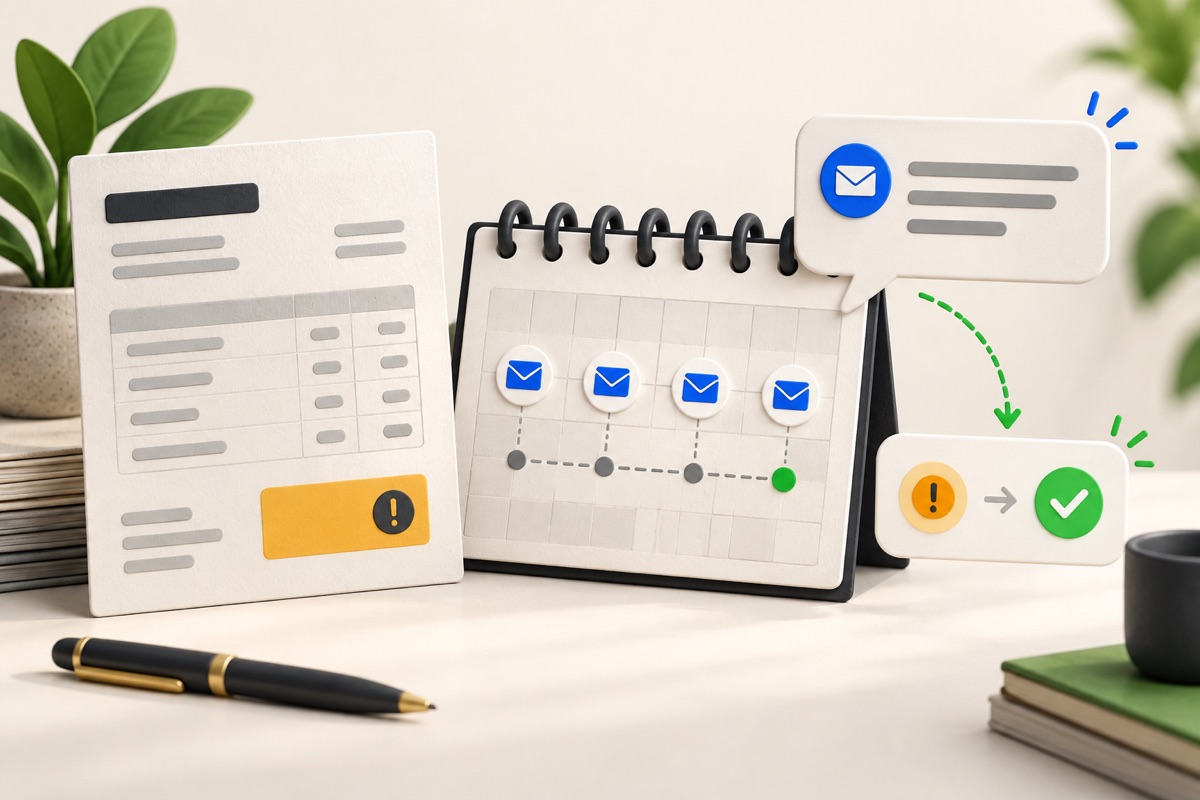
Check the bank or payment-processor record before calling an invoice unpaid. Confirm the invoice number, amount, due date, customer contact and any part payment. Sending a reminder after money arrived damages trust and creates avoidable support work.
Use a neutral subject and include a copy or secure link to the correct invoice. Never request passwords, one-time codes or unrelated identity documents in a payment reminder.
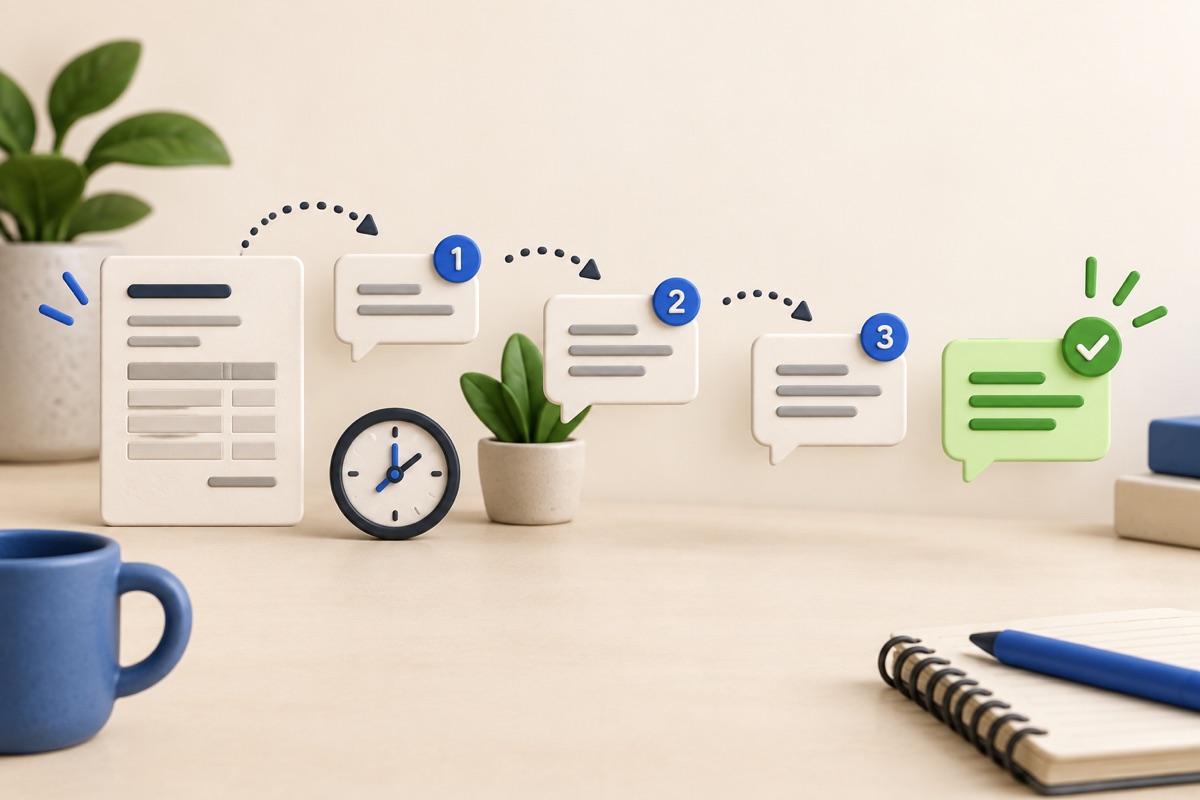
Use four messages for four different moments
Before due date: “A quick reminder that invoice INV-204 for $600 is due on 30 September. Please tell us if the document or payment details need clarification.” On the due date: “Invoice INV-204 is due today. If payment is already in progress, no action is needed beyond sharing the reference when available.”
After due date: “Our records show $600 remains outstanding on INV-204, due 30 September. Please confirm the expected payment date or let us know about a discrepancy.” Final manual review: “We have not been able to resolve INV-204. Please contact us by 8 October so we can agree the next step.” Replace the example values with reconciled records; do not copy dates blindly.
Handle part payments and disputes separately
If $200 of a $600 invoice is verified as received, the reminder should show a $400 balance and acknowledge the payment. Do not resend the original total as though nothing happened. If the customer disputes scope or quality, pause the ordinary reminder sequence and assign the issue for human review.
Fees, interest and collection steps depend on the agreement and applicable law. Do not add a charge because a generic template mentions it. Keep the reminder factual and obtain qualified advice for escalation.
- Verify payment status and part payments.
- Use the correct invoice and customer reference.
- Show the current balance and real due date.
- Give one clear action and a support route.
- Record the message, owner and response.
Automate the record before the message
A safe reminder workflow starts with a reliable invoice status. UtilityHub Business can organize the invoice, payment records and manual reminders in one place. Billing access remains permission-aware, and a generated document does not mark itself paid.
Automate sending only after testing delivery, opt-out handling, duplicates and failed-payment recovery. A quiet reminder based on correct data is more useful than a sophisticated sequence built on an incorrect balance.
Most relevant guides
Selected by shared topic, search intent and connected tools.